What if you could protect your online identity while minimizing unwanted emails? Temporary email services offer a practical solution, allowing you to engage with the digital world without compromising your privacy.
What You Will Learn
- The role of temporary email services in enhancing online privacy and minimizing spam.
- How temp emails can help you manage data privacy compliance with regulations like GDPR and CCPA.
- Key considerations for temp email providers regarding user consent and privacy notices.
- A brief overview of popular temp email services and their unique features.
- Steps temp email providers can take to strengthen data protection practices.
Key Compliance Requirements and Recommendations for Temp Email Services
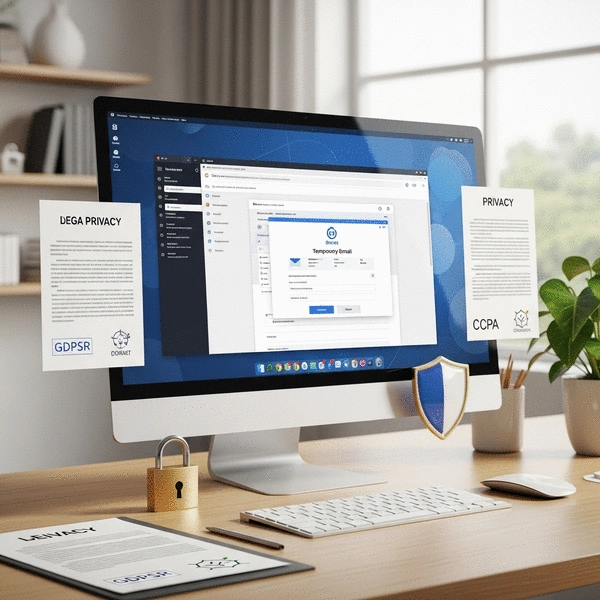
This visual outlines essential compliance considerations for temp email providers, ensuring user trust and legal adherence. For more information on the legal aspects, explore temporary email legality explained.
Compliance Requirement 1Clear Privacy Notices
Ensure services provide easy-to-understand privacy notices outlining data collection, usage, and user rights, avoiding legal jargon.
Compliance Requirement 2Prioritize User Consent
Implement mechanisms for users to easily provide or withdraw consent for data handling, especially when collecting data through temporary emails.
Compliance Requirement 3Regular Policy Review
Regularly review and update privacy policies to align with evolving data privacy regulations like GDPR and CCPA.
Compliance Requirement 4Robust Security Measures
Implement strong encryption technologies and security protocols to safeguard user data and prevent breaches.

Understanding Temp Email Services and Their Role in Data Privacy Compliance
In today's digital landscape, maintaining privacy is more crucial than ever. This is where temporary email services come into play. Temp emails allow users to communicate without revealing their permanent email addresses, effectively minimizing spam and enhancing online privacy. But why should you consider using them? Let’s dive into the reasons.
Temporary emails are often utilized to sign up for newsletters, access content, or register for services without exposing your main inbox. This versatile tool not only protects you from unwanted advertising but also reduces the risk of your personal information being misused. As a digital privacy advocate, I often encourage users to think of temp email as a shield, helping safeguard their online presence.
What is Temp Email and Why is it Used?
Temp email, or disposable email, refers to a service that generates a temporary email address for short-term use. These addresses can receive emails but typically expire after a set time or after a specific number of messages. This functionality is particularly useful for: Understanding temporary emails for sign-ups is key to maximizing these benefits.
- Signing up for online services without giving away your primary email.
- Reducing spam in your main inbox.
- Maintaining anonymity when accessing websites.
By using a temp email address, you can control what information you share online and mitigate privacy risks. It's a simple yet effective strategy to enhance your data security while navigating the web.
The Intersection of Temp Email and Data Privacy Laws
As data privacy becomes increasingly important, understanding how temp emails relate to regulations such as GDPR and CCPA is vital. These laws are designed to protect users' information and provide guidelines for businesses on how to handle data responsibly. Temp email services can play a role in compliance by:
- Offering users a way to manage their consent.
- Allowing businesses to engage with clients while minimizing personal data collection.
- Helping users exercise their rights to privacy and control over their information.
This intersection between temp email use and data privacy laws highlights the potential benefits and responsibilities that come with disposable email addresses. It’s essential to stay informed to navigate these regulations effectively.
Overview of Popular Temp Mail Services: ProtonMail, Mailinator, and Guerrilla Mail
Several temp email services have gained popularity, each offering unique features to enhance user experience. Here’s a quick look at three notable options:
- ProtonMail: Known for its strong encryption and privacy-focused approach, ProtonMail allows users to send and receive secure emails.
- Mailinator: A user-friendly option that allows anyone to create a temporary email address instantly. It’s widely used for quick sign-ups.
- Guerrilla Mail: Offers disposable email addresses that last for a limited time, making it perfect for users wanting to protect their identity online.
Each of these services has its strengths, making them valuable tools for anyone looking to enhance their online privacy. Choosing the right temp email provider can significantly impact your data protection strategy.
Pro Tip
When utilizing temporary email services, always opt for providers that prioritize user privacy and transparency. Look for services that offer clear privacy policies and ensure that your data is not sold or misused. This helps maintain your online security and enhances your overall experience.
Frequently Asked Questions About Temp Email and Data Privacy

Key Takeaways on Temp Email and Data Privacy Compliance
Understanding the intersection of temp email services and data privacy compliance is crucial for users and providers alike. As I’ve explored in previous sections, regulations like GDPR and CCPA significantly shape how temporary email addresses can be utilized. Here are some key compliance requirements and recommendations to keep in mind: For a comprehensive understanding, refer to understanding temporary email services.
- Ensure that temp email services provide clear and accessible privacy notices to users.
- Prioritize user consent when collecting data through temporary emails.
- Regularly review and update privacy policies in line with evolving regulations.
- Implement robust security measures to protect user data.
These fundamental aspects not only enhance user trust but also align with legal requirements. By being transparent about practices and developing a solid understanding of compliance, temp email services can effectively mitigate risks and build stronger relationships with their users.
The Importance of Privacy Notices and User Consent in Temp Email Usage
Privacy notices are not just a legal formality; they play a vital role in how users perceive their data privacy when using temporary email services. These notices should clearly outline what data is collected, how it’s used, and the user’s rights regarding their information. Here are some factors to consider:
- Make privacy notices easy to understand, avoiding legal jargon.
- Highlight how temp email helps protect user information.
- Ensure there are mechanisms for users to provide or withdraw consent easily.
By focusing on these elements, providers can foster an environment of trust and transparency, essential for compliance and user satisfaction. It's about empowering users to make informed decisions while utilizing your service!
Taking Action: Enhancing Your Temp Email Practices for Compliance
Next Steps for Temp Email Providers
As a temp email provider, it’s essential to take proactive steps towards compliance. Here’s a quick checklist to enhance your practices:
- Review and update your privacy policies regularly.
- Invest in robust encryption technologies to safeguard user data.
- Conduct training for your team on data privacy regulations.
- Engage with legal experts to ensure your practices align with relevant laws.
Implementing these steps can significantly reduce compliance risks and enhance the overall user experience with your service. If you haven’t already, I encourage you to start these processes right away!
Resources for Further Guidance on GDPR and CCPA Compliance
Staying informed about GDPR and CCPA compliance can be challenging, but there are valuable resources available to help. Consider the following:
- The official GDPR and CCPA websites for the latest updates.
- Online courses focusing on data privacy and compliance.
- Webinars hosted by privacy experts and industry leaders.
- Networking with other temp email providers for shared insights and experiences.
These resources can serve as a foundation for building a robust compliance strategy. Remember, staying educated is key in this ever-evolving landscape!
Conducting a Privacy Impact Assessment (PIA) for Temp Email Services
Conducting a Privacy Impact Assessment (PIA) is a critical step in ensuring that your temp email service complies with data privacy regulations. Here’s how you can approach it: For more privacy tips, check out temporary vs. permanent email explained.
- Identify how personal data is collected, used, and stored.
- Evaluate the risks associated with your data handling practices.
- Determine the implications for user privacy and how to mitigate risks.
- Document your findings and make the necessary adjustments to your processes.
By performing a PIA, you’ll not only comply with legal requirements but also enhance your service's trustworthiness. It's a win-win for both users and providers!
Recap of Key Points
Here is a quick recap of the important points discussed in the article:
- Temporary email services enhance online privacy by allowing users to communicate without revealing their permanent email addresses.
- Using temp emails can help minimize spam and reduce the risk of personal information misuse.
- Compliance with data privacy regulations like GDPR and CCPA is essential; temp emails can aid in managing user consent.
- Key compliance practices include providing clear privacy notices and prioritizing user consent when collecting data.
- Popular temp email services like ProtonMail, Mailinator, and Guerrilla Mail each offer unique features for user privacy.